From complex hazards to measurable exposure—and better protection.
We connect controlled simulation, exposure science, materials, and human performance to understand hazards and engineer better protective systems.
The NexGen approach
One program.
From source to person.
Environmental and occupational science often encounters hazards retrospectively, typically as particulate mass detected by monitors after the relevant source conditions and material history have dissipated. NexGenPPT addresses the entire exposure chain, from source to individual. At the source, the team generates fires, wildland–urban interface smoke, and lithium-ion thermal runaway under controlled conditions to characterize their emissions. At the individual level, the group engineers samplers, filters, and protective materials to determine what is inhaled, absorbed, or transported beyond the workplace.
Critical scientific questions arise between these endpoints, including how materials age, absorb and release contaminants, and fail during service, as well as how predictive models can capture these processes. Each stage informs the others. For example, a smoke-chemistry result may prompt revision of a glove standard, while a decontamination failure can guide the design of subsequent samplers. When a model diverges from observation, the discrepancy is interpreted as an indication of missing physical mechanisms rather than random error.

Research areas
What we study
Four research areas with one goal: protective equipment that works in the field.

Fire Smoke and Firefighter Exposure
We generate and characterize smoke from wildland–urban interface, structural, and lithium-ion battery fires, measure how toxic particles and chemicals reach firefighters and their gear, and test how well cleaning removes them.
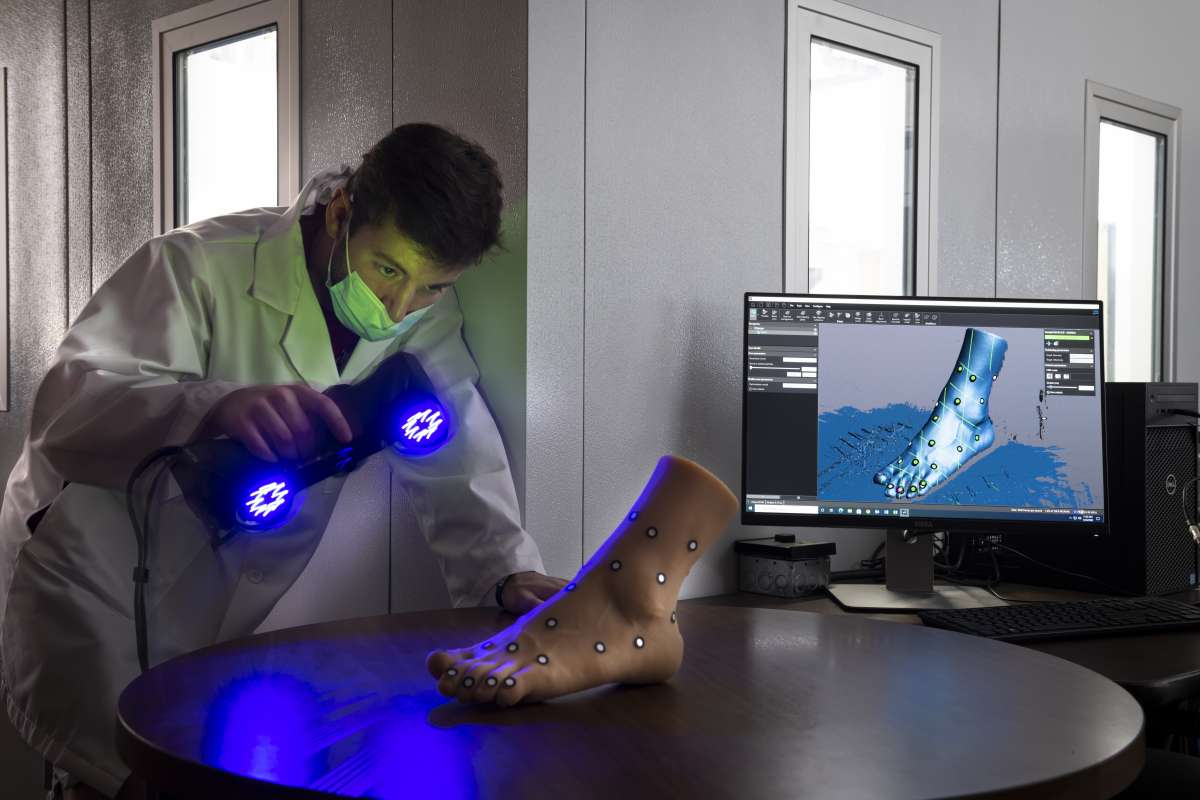
AI SAFEHAND: Glove Sizing and Fit
We combine 3D hand scanning, photographs, and machine learning to measure firefighters’ hands and match them to gloves that fit. Better fit improves dexterity and protection and supports new sizing standards.
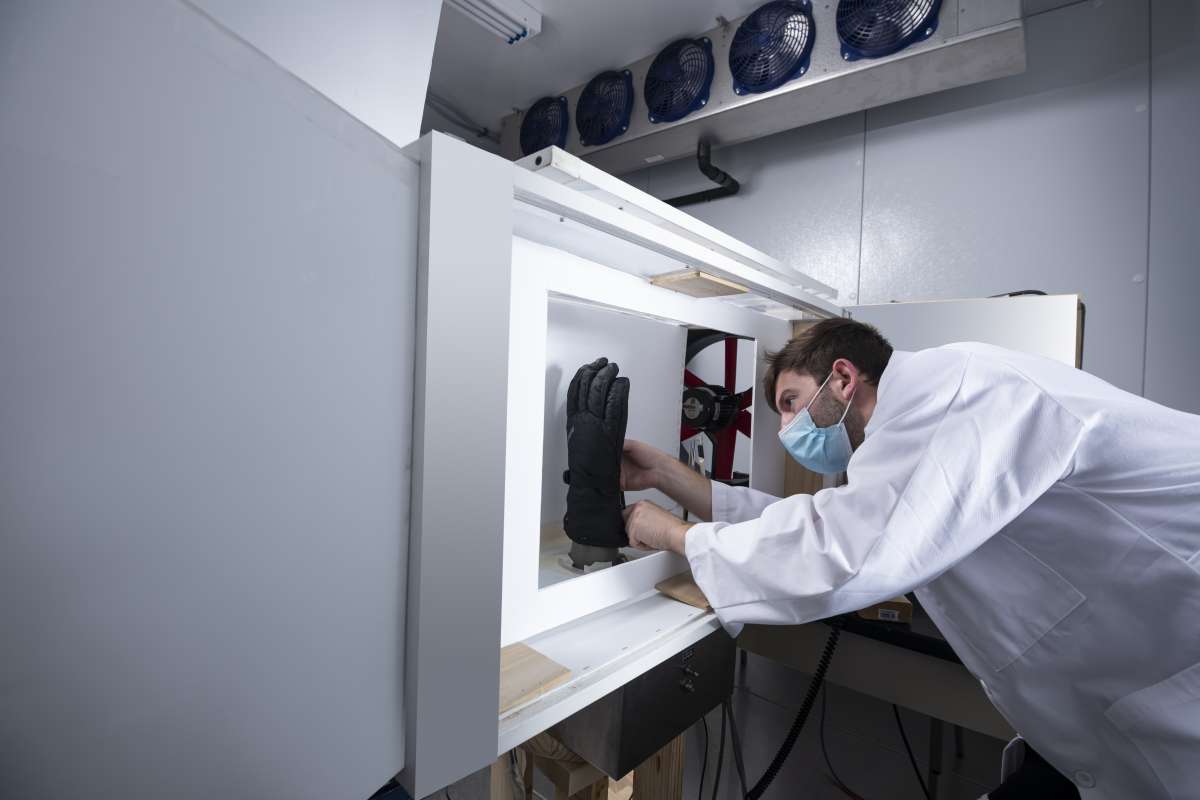
Thermal Protection and Comfort
We model how heat and cold move between the body, clothing, and the environment, and we test gloves, hoods, and garments under heat, flame, and cold–wet conditions to predict protection and comfort.

Functional Textiles and Healthcare PPE
We develop antimicrobial nanofibers, self-decontaminating fabrics, and respiratory protection for healthcare workers and pandemic response, with partners at UC Davis and the University of Cincinnati.
Publications
Recent research
Peer-reviewed articles published in 2026, newest first.
Journal of Hazardous Materials · October 2026
Comparative evaluation of passive sampling materials under controlled fire smoke exposure: uptake of PAHs and battery-derived metals
Compares passive sampler materials for capturing PAHs and battery-derived metals from fire smoke, a step toward low-cost personal exposure monitoring.
Textile Research Journal · September 2026
Protective textiles in cold–wet extreme environments: a narrative review of materials, testing, and glove performance in commercial fishing
Reviews materials and test methods for gloves that must stay protective when they are cold and wet.
Journal of Hazardous Materials · July 2026
Multilayer firefighter PPE as a reservoir for PAH contaminants after controlled pine–polystyrene smoke exposure
Shows how PAHs from smoke build up in each layer of turnout gear after controlled exposure.
Emerging collaboration
What travels with smoke besides chemicals?
A new conversation in pyroaerobiology.
We are developing collaborations to study microorganisms aerosolized and transported by fire. Our combustion, aerosol, and materials expertise can help investigate how fire conditions and particle properties influence microbial viability, transport, and deposition.
Connecting engineering, microbiology, and fire ecology through a One Health perspective.
Questions we want to connect
- 01Fire conditionsSource & exposure history
- 02Particle propertiesPhysical & chemical interactions
- 03Microbial fateViability, transport & deposition
One HealthPeople · Animals · Plants · Ecosystems
An emerging set of research questions, developed with complementary biological and ecological expertise.
NexGenPPT leads a statewide program with the University of Iowa and Iowa fire service partners to reduce firefighters’ exposure to carcinogens. The program has five pillars: fireground exposure reduction, PPE contamination documentation, exposure monitoring, clinical screening guidance, and navigation and continuous improvement. The steering committee met for the first time in July 2026, and the program was covered by the ISU News Service and the Iowa Capital Dispatch in September 2026.

News & events
Latest news
From the lab to the field.
Upcoming Presentation: ATA Emerging Technologies Conference
October 7, 2026
Dr. Guowen Song and Dr. Rui Li present “Engineering Anti-Smoke Textiles: Insights from Controlled WUI and Battery Fire Simulations” at the Advanced Textiles Expo in Orlando on November 2.
NexGenPPT Featured in Iowa Capital Dispatch
September 21, 2026
An Iowa Capital Dispatch article highlights how our hazard simulation and PPE contamination research is shaping Iowa’s statewide strategy to protect firefighters from harmful exposures.
ISU News Service Showcases NexGenPPT’s Work to Reduce Firefighter Cancer Risk
September 9, 2026
The ISU News Service highlights the statewide Iowa Firefighter Cancer Prevention and Exposure Reduction Program and the role of our laboratory in measuring the contaminants that remain on gear.
Work with us
Three ways in.
For researchers & agencies
Partner with us
Proposal partnership as PI or co-PI across materials, exposure science, human factors, digital twins, and health outcomes; standards development through ASTM, NFPA, and National Academies channels; shared access to ACCESS and the national firefighter hand database.
For industry & the fire service
Test with us
Product evaluation on instrumented thermal and flash-fire manikins and sweating hand systems, textile bench testing, controlled smoke and contamination exposure, human-subject trials, and design consultation from prototype through standard.
For students & postdocs
Join the team
Train across the whole loop: materials, combustion and aerosols, physiology, toxicology, and AI. Graduate and postdoctoral positions open as projects are funded; send us your CV and research interests.